

Microbial safety checks: the key to unlocking Europe's direct potable reuse revolution?
Updated: Aug 19

Europe's first direct potable reuse scheme from municipal wastewater is
supplying 12,000 people in Belgium today and is doubling its capacity to 800
million litres a year by end of 2026
bNovate's BactoSense provides continuous real-time microbiological
monitoring at the Hofstade Water Production Centre, giving operators 24/7
certainty that the water entering the network is safe to drink
For a facility producing 50,000 litres of drinking water per hour, a three-day
testing blind spot is not an option. BactoSense delivers results in 20 minutes
AALST, Belgium – Near-real-time microbial monitoring data supplied by Swiss-based bNovate Technologies is ensuring Europe’s first direct potable reuse (DPR) scheme meets strict regulations as the continent faces growing pressure on freshwater supplies.
Europe’s first municipal wastewater direct potable reuse project
The Water Production Centre (WPC) in Hofstade is the continent’s first direct potable
reuse (DPR) project using municipal wastewater, producing around 400 million litres of
drinking water per year, supplying approximately 12,000 people. By the end of 2026, the
plant’s production capacity will double to 800 million litres a year.
The project has been developed by Waterunie, a utility joint venture involving Farys and
De Watergroep, in collaboration with Belgian water specialist Nuoro, Aquafin and the
CAPTURE research platform. In 2025, the project was awarded the Water Reuse Europe
– Innovation Prize, which rewards initiatives that demonstrate excellence in addressing
current/future water supply challenges through water reuse.
Urban resilience is driving the direct potable reuse market
DPR is increasingly viewed as a strategy to drive urban resilience, cost efficiency and
sustainable development. In 202
4, the global market for water reuse was valued at €15
billion and is projected to reach €26 billion by 2030, according to a recent report by the
International Desalination and Reuse Association (IDRA)*. Across the EU, over 86% of
wastewater has treatment coverage, with DPR expansion being seen as a way for the
continent to expand its climate resilience strategy.
Download the full DPR success story
See how continuous microbiological monitoring supports operational confidence at Europe’s first municipal wastewater direct potable reuse scheme.
Meeting the demand for near-real-time assurance of water quality
Direct potable reuse demands continuous, near-real-time assurance of water quality –
something that conventional microbiological testing methods are not designed to
provide. BactoSense meets that requirement by continually monitoring microbial cell
counts and integrating with SCADA (supervisory control and data acquisition) systems
to alert operators to any abnormal changes. BactoSense reduces testing time from as
much as three days, using traditional laboratory testing, to as little as 20 minutes.
BactoSense addresses the three main confidence barriers to DPR adoption: public;
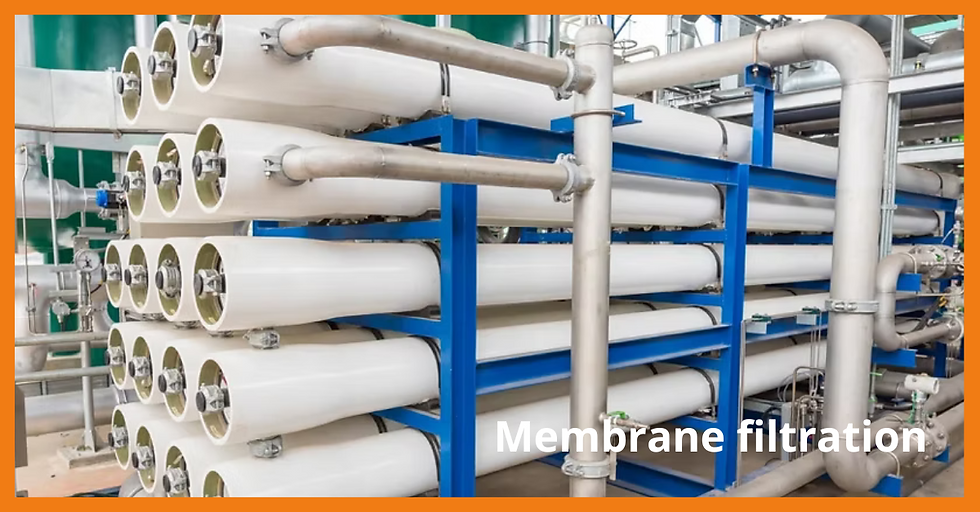
regulatory, and operational. While membrane filtration, activated carbon filtration, and
disinfection systems clean the water, when used as the final stage of the DPR process,
bNovate’s BactoSense monitors the treated water in near-real time, providing fast and
accurate insights into changes in water quality.

Europe waking up to safe potable drinking water reuse
Bart de Gusseme, senior expert, Innovation Water at FARYS, said: “BactoSense
technology serves as a valuable parameter in our SCADA system. If it detects abnormal
changes to microbial levels in the water output, it is programmed to automatically stop
the plant. Not only does this help us to safeguard the outgoing water quality, but it also
fosters confidence in potable reuse as a safe drinking water source.”
Serge Gander, CEO of bNovate Technologies, said: “DPR is no longer a pilot project. It is
the future of water supply for water-stressed regions, and Europe is waking up to that
fast.”
He added: “The IDRA's 2026 report makes clear that real-time monitoring is not
optional; it is the foundation that makes the whole thing work. We have proven that at
Hofstade. One bad surprise in a DPR scheme does not just damage operations; it can
set back public and regulatory confidence for years. That is why continuous microbial
monitoring is a must-have. You cannot scale reuse if you cannot measure the water
quality from your treatment plant and, at the same time, create trust. That is what we
do, and that is what the industry needs to understand.”
Download the full DPR success story
See how continuous microbiological monitoring supports operational confidence at Europe’s first municipal wastewater direct potable reuse scheme.
Conclusion
Direct potable reuse in Europe will not scale on treatment performance alone, but on the ability to prove continuously and transparently that the water is safe. Projects like the Water Production Centre in Hofstade show that this is achievable: by combining advanced treatment with near-real-time microbiological monitoring, operators can move from delayed verification to immediate control. As regulatory frameworks evolve and public scrutiny increases, continuous microbial safety checks will become the standard that underpins trust, enables confident operation, and ultimately unlocks the full potential of DPR across Europe.
Discover how fast microbial insights can be integrated into your process and strengthen your DPR strategy:
Frequently Asked Questions
Why are traditional microbiological methods not sufficient for DPR operations?
Conventional methods such as culture-based testing provide results after 24–72 hours. This delay creates a blind spot where water is already in distribution before results are available, limiting their usefulness for operational decision-making.
How does near-real-time microbiological monitoring change operations?
It reduces the delay from days to minutes, allowing operators to detect changes quickly, trigger alarms, and take action immediately. This shifts monitoring from retrospective verification to proactive control.
How does microbiological monitoring support public and regulatory trust?
Continuous data provides transparency and traceability. Being able to demonstrate stable water quality in near real time helps build confidence among regulators and the public.


Comments